
No Other Land

A Palestinian Story of resliance and resistance.
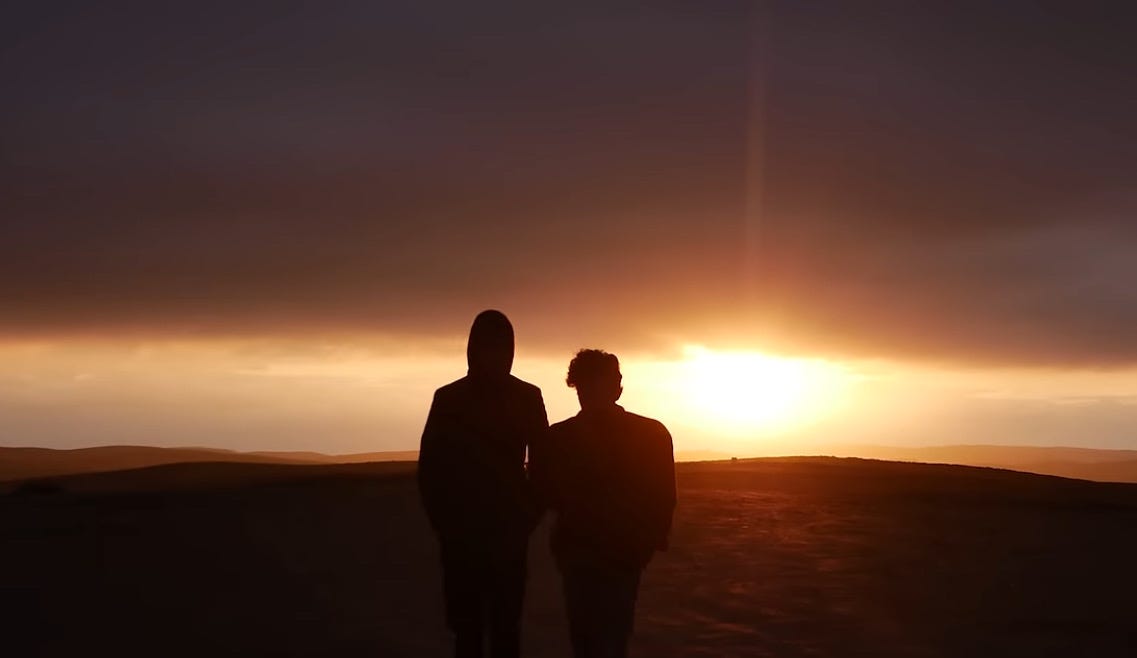
Tonight I saw the film No Other Land, created by Basel Adra, Yuval Abraham, Hamdan Ballal, and Rachel Szar. The film documents the struggle of the Palestinian villages of Masafar Yatta, as the people fight to keep their homes while Israeli soldiers continuously demolish them. The IDF members declare the land to be legally designated as military training grounds, though it is revealed towards the end of the film that the reason for establishing these training grounds was too prevent the Arab community from expanding. (As was discovered via secret Israeli government documents.)
The film is deeply moving, from the display of Basel’s Father Nasser’s unwavering spirit and belief in his people, to the moments when Israeli soldiers shoot protesters and villagers refusing to give up their building supplies. The people of Masafar Yatta hold out for years. Some of them livie in caves and rebuild homes (and a school) in secret at night. They hold out because this is the only land they have, they don’t have elsewhere to go. If they give up their homes and move into crowded cities as renters, those homes are forever lost.
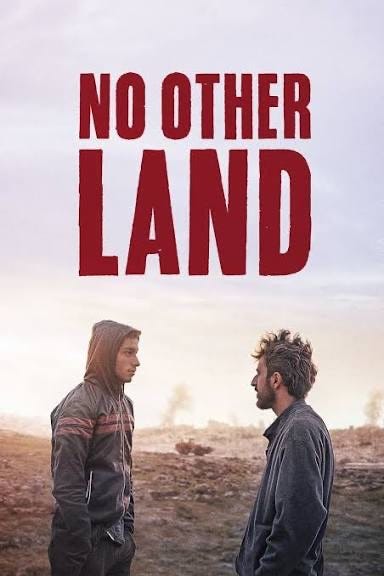
The primary storytellers in the film, Basel (a native) and Yuval (an Israeli journalist,) document these demolitions and the resistance to them primarily for one reason: to get the attention of mainstream media and of citizens around the world—so that perhaps people can spur change. The sharing of the story is in and of itself an act of resistence for which, at times, they risk their lives.
This leaves me with the question—what will we, who have recieved their message, do? We owe it to the people of Masafar Yatta, and Palestinians as a whole, to do everything in our power to oppose their ongoing persecution. We must support the outlets that disperse this information, we must show up wherever and whenever we can to tell our leaders that we do not condone this occupation. That we do not approve for our tax dollars to be spent to further the eviction and the killing of innocent Palestinians, Arabs, and their supporters/allies. I will admit that while I have attended protests for the movement in support of Palestinians in the past, I have often not attended due to the feeling that doing so wouldn’t make a difference. That to protest at that particular location would not have any effect on their struggle. Even that to oppose this genocide would make no difference in a country where both political parties have by and large supported Israel’s military efforts.
This film has shifted my perspective. Regardless of the degree of impact, if the people of Masafar Yatta could find the courage to protest in their villages three times a week—protesting the occupation, the eviction, the shooting and resulting paralysis of one of their community members, the inhibition of their people from simply leading lives and having homes—who am I not to protest?
Surely the least I can do is show my support for a people who remain dedicated to their homeland in the face of what many would see as a hopeless situation. Show my elected officials that my expectation of them as an American citizen is that they oppose these military actions; that they do what is in their power to lessen or end our supplying weapons and funding to this occupation.
Who would I be to avert my eyes? To stay inside with the doors locked? To pretend it has nothing to do with me? Basel reminds Yuval, in the film, that this has been happening for decades and that to resist requires patience. Later he says that one drop of water does not make a change, but if you continue little by little with more drops of water, eventually there is change.
Not only do I ask who would I be to ignore this issue, I also ask what kind of world will be left if we excuse such actions? What will we say if someone comes to our homes, and tells us it is now illegal to live there? What place will any of us have left go, if we bend to a will that says people don’t have a right to the land they have tended for generations, the right to water, the right to a home? Land is a limited resource, so where will we all go if we allow people in power to condone armies expelling peoples from their homelands, and erasing their stories?
Do not condone. Do not lock yourself in your home. Do not avert your eyes.
Thank you, Mage, for sharing the importance of this film and the way it impacted you personally.
I agree and support you in reminding people not to avert their eyes. Stand and speak truth to power, always.